





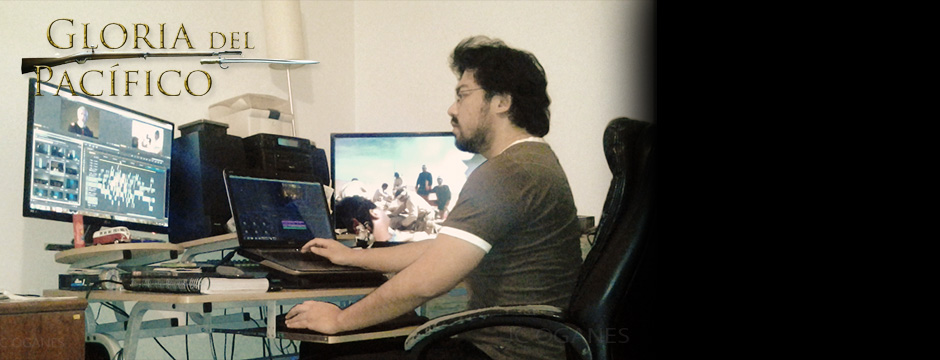








These weeks, while in the post-production process, was thinking again what has been in my mind for some time now: buying another higher-end camera.
As people can see, I used the amazing Panasonic HVX-200 together with the superb Letus Extreme to give it the best 35mm depth-of-field on the market. I bought them both back in 2008. I take great pride in having made the best selections when researching for a good film/video camera. Back in the late 90's it was the awesome Canon XL-1 and its subsequent revisions. I saw potential in a camera that had interchangeable lens capability and it opened a whole new door to me production and visual wise. It was still SD but, hey...it was the 90's. Early 2000s and I remember HD started to show its head. It was something we all filmmakers pointed at for superior quality. I don't remember what HD camera came out first, just that it was around 2002 that I read in an article. It used one CCD or something as it stated. I think it was JVC or Sharp and used the newly developed HDV compression format for use with DV tapes already used massively by all of us back then. In my case, I eye-balled it extensively but wasn't liking much the compression ratio HDV used. We all who did a lot of post and know how much a pain in the butt it was with the DV codec (difficult chroma-keying, blocky edges, moire patterns and pixelated squares when doing extreme color-correction), having further compression than DV and reading about the lack of intraframe qualities.....it was simply a huge thing to avoid for me. Thank God I never jumped the HDV wagon and the many disappointed users was my best proof. I simply waited for the best camera and compression scheme yet to come. Enter the HVX-200.
It came out in 2005 and bought it in 2008 when the A upgrade was released. Its ability to shoot many frame rates as a film camera and the DVCPROHD codec at 100 Mbps (4 times the DV data rate) simply was a no-brainer for me. I was bought. In addition, it used intra-frame compression so no artifacts in fast motion and beautiful chroma-key was finally possible, a big thing for me because of its 4:2:2 chroma sampling. More information to work in post without worries.
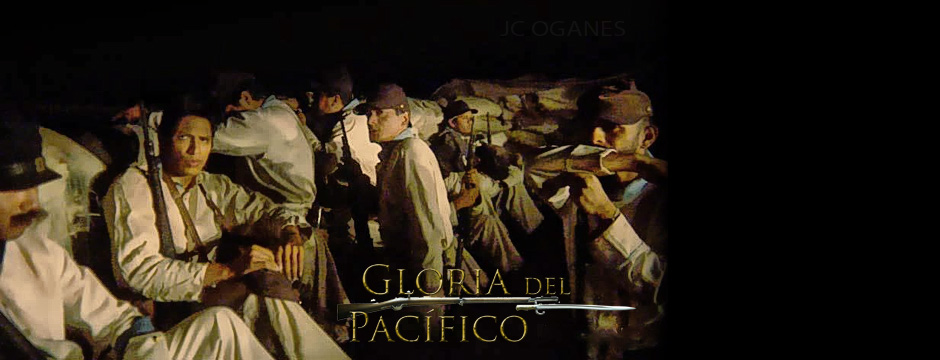
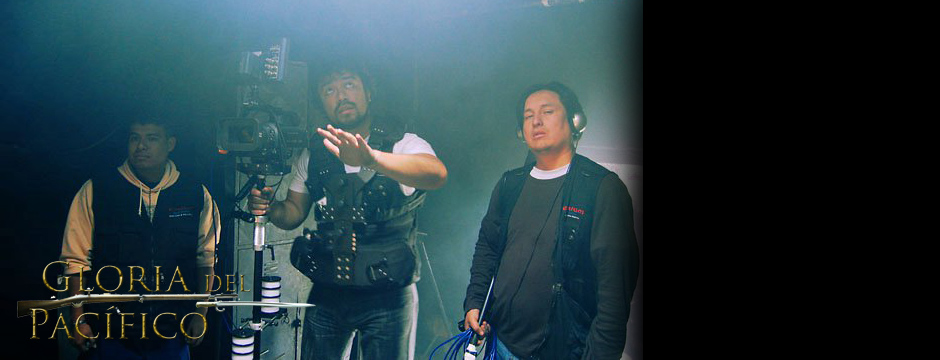
Now, after 6 years of filming videoclips, a commercial, TV pilots, some short films and the feature Gloria del Pacifico, pushing the camera to the limit with all its battle scenes and extreme weather conditions, I'm finally ready to move on to the next level and what is now a necessity to be up to today's standards: 4K cinematography.
Been checking around the new options lately and a few months back I was about to go for the HD capable DSLR camera, the Canon 5Dm-III because of its unbelievable low-light sensitivity, a necessity I do have when shooting outdoors in the desert at night or in a dark 19th century town street. Wasn't too crazy about its small size (although, the HVX200 together with the Letus Extreme and all accessories makes all weigh around 25 lbs.) and the DSLR would be lighter. But still, not much sound control, etc. Then, I learned about the BlackMagic 4K Prodcution Camera. Was checking it out a couple months ago and compared to other stuff around, was beggining to like it because of the brand (BlackMagic DOES make awesome equipment, with super quality at unbeatable prices. Being the camera at nearly 3 grand, it was a sure contender. The specs were amazing. Only drawback was the reviews about it's lack of low-light sensitivity (a true sad thing for me) and that it was an energy hog....lasting only a few hours and having an internal battery. Id have to stop filming I guess, and charge it in order to be able to keep shooting. I just couldn't picture myself in the middle of the desert, filming, running out of time as the sun slowly disappeared in the horizon and me.....still charging the darn thing. No. Simply no.
Now, at this years NAB, the new BlackMagic 4K URSA is unleashed. I see that it not only has ALL the specs of a true film/video camera like XLR connectors, but also a huge 10-inch monitor and 2 other side screens also (handy for camera assistants and crew members) and a true feel of a big pro camera. Battery has more life and also can use Anton Bauer ones. Many models were released and the one with the EF mount at $5,995 is simply awesome and available by July this year. The Ursa records in 12-bit lossless compressed Cinema DNG raw and ProRes formats, and dual CFast 2.0 card recorders are built in. Having also a global shutter image sensor is such a plus (no more skew or jello-effect) and a true winner fact: it can be upgraded by the user if a new and improved sensor design becomes available in the future and that it would be a breeze to change it yourself. I guess I read somewhere that you would only need an Allen wrench.

I wonder if the sensor is the same as the prior 4K Production Camera. It would be a sad thing to be so....the low-light sensitivity is truly a downside for me as renting lights or even powering them up in the middle of the desert for the next film's battle scenes would be such an expensive task.
Let's see what the future holds. This camera seems to be the winner for me so far. I'm really not excited about the RED (too expensive, too many accessories that skyrocket the price tag well above 30K) so let's see what are the reviews for it when its finally released.
4K...... 4K....
Blackmagic CEO Grant Petty said the design of the Ursa was inspired by seeing the way many owners tricked out their Blackmagic Cinema Cameras with rails and accesories that gave it a larger form factor that made more sense for production crews. "This camera is the center of a multi-person workflow," he said, with different "zones" for the DP, for the assistant, and for audio. The new design also allows efficient cooling to enable higher frame rates (up to 60p in HD and Ultra HD).

As people can see, I used the amazing Panasonic HVX-200 together with the superb Letus Extreme to give it the best 35mm depth-of-field on the market. I bought them both back in 2008. I take great pride in having made the best selections when researching for a good film/video camera. Back in the late 90's it was the awesome Canon XL-1 and its subsequent revisions. I saw potential in a camera that had interchangeable lens capability and it opened a whole new door to me production and visual wise. It was still SD but, hey...it was the 90's. Early 2000s and I remember HD started to show its head. It was something we all filmmakers pointed at for superior quality. I don't remember what HD camera came out first, just that it was around 2002 that I read in an article. It used one CCD or something as it stated. I think it was JVC or Sharp and used the newly developed HDV compression format for use with DV tapes already used massively by all of us back then. In my case, I eye-balled it extensively but wasn't liking much the compression ratio HDV used. We all who did a lot of post and know how much a pain in the butt it was with the DV codec (difficult chroma-keying, blocky edges, moire patterns and pixelated squares when doing extreme color-correction), having further compression than DV and reading about the lack of intraframe qualities.....it was simply a huge thing to avoid for me. Thank God I never jumped the HDV wagon and the many disappointed users was my best proof. I simply waited for the best camera and compression scheme yet to come. Enter the HVX-200.
It came out in 2005 and bought it in 2008 when the A upgrade was released. Its ability to shoot many frame rates as a film camera and the DVCPROHD codec at 100 Mbps (4 times the DV data rate) simply was a no-brainer for me. I was bought. In addition, it used intra-frame compression so no artifacts in fast motion and beautiful chroma-key was finally possible, a big thing for me because of its 4:2:2 chroma sampling. More information to work in post without worries.
Now, after 6 years of filming videoclips, a commercial, TV pilots, some short films and the feature Gloria del Pacifico, pushing the camera to the limit with all its battle scenes and extreme weather conditions, I'm finally ready to move on to the next level and what is now a necessity to be up to today's standards: 4K cinematography.
Been checking around the new options lately and a few months back I was about to go for the HD capable DSLR camera, the Canon 5Dm-III because of its unbelievable low-light sensitivity, a necessity I do have when shooting outdoors in the desert at night or in a dark 19th century town street. Wasn't too crazy about its small size (although, the HVX200 together with the Letus Extreme and all accessories makes all weigh around 25 lbs.) and the DSLR would be lighter. But still, not much sound control, etc. Then, I learned about the BlackMagic 4K Prodcution Camera. Was checking it out a couple months ago and compared to other stuff around, was beggining to like it because of the brand (BlackMagic DOES make awesome equipment, with super quality at unbeatable prices. Being the camera at nearly 3 grand, it was a sure contender. The specs were amazing. Only drawback was the reviews about it's lack of low-light sensitivity (a true sad thing for me) and that it was an energy hog....lasting only a few hours and having an internal battery. Id have to stop filming I guess, and charge it in order to be able to keep shooting. I just couldn't picture myself in the middle of the desert, filming, running out of time as the sun slowly disappeared in the horizon and me.....still charging the darn thing. No. Simply no.
Now, at this years NAB, the new BlackMagic 4K URSA is unleashed. I see that it not only has ALL the specs of a true film/video camera like XLR connectors, but also a huge 10-inch monitor and 2 other side screens also (handy for camera assistants and crew members) and a true feel of a big pro camera. Battery has more life and also can use Anton Bauer ones. Many models were released and the one with the EF mount at $5,995 is simply awesome and available by July this year. The Ursa records in 12-bit lossless compressed Cinema DNG raw and ProRes formats, and dual CFast 2.0 card recorders are built in. Having also a global shutter image sensor is such a plus (no more skew or jello-effect) and a true winner fact: it can be upgraded by the user if a new and improved sensor design becomes available in the future and that it would be a breeze to change it yourself. I guess I read somewhere that you would only need an Allen wrench.
I wonder if the sensor is the same as the prior 4K Production Camera. It would be a sad thing to be so....the low-light sensitivity is truly a downside for me as renting lights or even powering them up in the middle of the desert for the next film's battle scenes would be such an expensive task.
Let's see what the future holds. This camera seems to be the winner for me so far. I'm really not excited about the RED (too expensive, too many accessories that skyrocket the price tag well above 30K) so let's see what are the reviews for it when its finally released.
4K...... 4K....
Blackmagic
Design launched two new camera lines at NAB this week—the Blackmagic
Studio Camera with an MFT lens mount and a 10-inch viewfinder on the
back, facing the operator, which is available in HD ($1,995) and 4K
($2,995) versions, and the 4K Blackmagic Ursa, which features a
similarly distinctive 10-inch fold-out monitor as well as a second,
five-inch screen for scopes, settings, and status views. The Ursa is
slated to ship in EF- ($5,995) and PL-mount ($6,495) versions in June or
July, and in a B4 (price TBD) lens-mount version later this year.
Blackmagic CEO Grant Petty said the design of the Ursa was inspired by seeing the way many owners tricked out their Blackmagic Cinema Cameras with rails and accesories that gave it a larger form factor that made more sense for production crews. "This camera is the center of a multi-person workflow," he said, with different "zones" for the DP, for the assistant, and for audio. The new design also allows efficient cooling to enable higher frame rates (up to 60p in HD and Ultra HD).
- See more at: http://www.studiodaily.com/2014/04/blackmagic-announces-new-4k-ursa-studio-cameras/#sthash.Gt1XenyK.dpuf
Blackmagic
Design launched two new camera lines at NAB this week—the Blackmagic
Studio Camera with an MFT lens mount and a 10-inch viewfinder on the
back, facing the operator, which is available in HD ($1,995) and 4K
($2,995) versions, and the 4K Blackmagic Ursa, which features a
similarly distinctive 10-inch fold-out monitor as well as a second,
five-inch screen for scopes, settings, and status views. The Ursa is
slated to ship in EF- ($5,995) and PL-mount ($6,495) versions in June or
July, and in a B4 (price TBD) lens-mount version later this year.
Blackmagic CEO Grant Petty said the design of the Ursa was inspired by seeing the way many owners tricked out their Blackmagic Cinema Cameras with rails and accesories that gave it a larger form factor that made more sense for production crews. "This camera is the center of a multi-person workflow," he said, with different "zones" for the DP, for the assistant, and for audio. The new design also allows efficient cooling to enable higher frame rates (up to 60p in HD and Ultra HD).
The Ursa records in 12-bit lossless compressed Cinema DNG raw and
ProRes formats, and dual CFast 2.0 card recorders are built in. It also
has a global shutter image sensor that can be upgraded by the user if a
new and improved sensor design becomes available. We were told by
Blackmagic's Bob Caniglia that all that is required is an Allen wrench.
Blackmagic is so confident this design is a winner that the Ursa will
be available in a unique "HDMI" configuration ($4,495) with no sensor at
all. The lens mount is replaced by a cheese plate and a HDMI input,
allowing another camera (a DSLR, for example) to be wired into the URSA
and take advantage of the body design.
- See more at: http://www.studiodaily.com/2014/04/blackmagic-announces-new-4k-ursa-studio-cameras/#sthash.Gt1XenyK.dpuf
Blackmagic CEO Grant Petty said the design of the Ursa was inspired by seeing the way many owners tricked out their Blackmagic Cinema Cameras with rails and accesories that gave it a larger form factor that made more sense for production crews. "This camera is the center of a multi-person workflow," he said, with different "zones" for the DP, for the assistant, and for audio. The new design also allows efficient cooling to enable higher frame rates (up to 60p in HD and Ultra HD).
The Ursa records in 12-bit lossless compressed Cinema DNG raw and
ProRes formats, and dual CFast 2.0 card recorders are built in. It also
has a global shutter image sensor that can be upgraded by the user if a
new and improved sensor design becomes available. We were told by
Blackmagic's Bob Caniglia that all that is required is an Allen wrench.
Blackmagic is so confident this design is a winner that the Ursa will
be available in a unique "HDMI" configuration ($4,495) with no sensor at
all. The lens mount is replaced by a cheese plate and a HDMI input,
allowing another camera (a DSLR, for example) to be wired into the URSA
and take advantage of the body design.

The Studio Camera is built in a magnesium alloy body with a four-hour
battery, mic connections with phantom power, and bidirectional optical
fiber and SDI connections for connecting to a live production switcher.
The HD version is shipping now and the 4K version is scheduled for June
delivery.
- See more at: http://www.studiodaily.com/2014/04/blackmagic-announces-new-4k-ursa-studio-cameras/#sthash.Gt1XenyK.dpuf
Blackmagic
Design launched two new camera lines at NAB this week—the Blackmagic
Studio Camera with an MFT lens mount and a 10-inch viewfinder on the
back, facing the operator, which is available in HD ($1,995) and 4K
($2,995) versions, and the 4K Blackmagic Ursa, which features a
similarly distinctive 10-inch fold-out monitor as well as a second,
five-inch screen for scopes, settings, and status views. The Ursa is
slated to ship in EF- ($5,995) and PL-mount ($6,495) versions in June or
July, and in a B4 (price TBD) lens-mount version later this year.
Blackmagic CEO Grant Petty said the design of the Ursa was inspired by seeing the way many owners tricked out their Blackmagic Cinema Cameras with rails and accesories that gave it a larger form factor that made more sense for production crews. "This camera is the center of a multi-person workflow," he said, with different "zones" for the DP, for the assistant, and for audio. The new design also allows efficient cooling to enable higher frame rates (up to 60p in HD and Ultra HD).
Blackmagic CEO Grant Petty said the design of the Ursa was inspired by seeing the way many owners tricked out their Blackmagic Cinema Cameras with rails and accesories that gave it a larger form factor that made more sense for production crews. "This camera is the center of a multi-person workflow," he said, with different "zones" for the DP, for the assistant, and for audio. The new design also allows efficient cooling to enable higher frame rates (up to 60p in HD and Ultra HD).
The Ursa records in 12-bit lossless compressed Cinema DNG raw and
ProRes formats, and dual CFast 2.0 card recorders are built in. It also
has a global shutter image sensor that can be upgraded by the user if a
new and improved sensor design becomes available. We were told by
Blackmagic's Bob Caniglia that all that is required is an Allen wrench.
Blackmagic is so confident this design is a winner that the Ursa will
be available in a unique "HDMI" configuration ($4,495) with no sensor at
all. The lens mount is replaced by a cheese plate and a HDMI input,
allowing another camera (a DSLR, for example) to be wired into the URSA
and take advantage of the body design.
The Studio Camera is built in a magnesium alloy body with a four-hour
battery, mic connections with phantom power, and bidirectional optical
fiber and SDI connections for connecting to a live production switcher.
The HD version is shipping now and the 4K version is scheduled for June
delivery.
- See more at: http://www.studiodaily.com/2014/04/blackmagic-announces-new-4k-ursa-studio-cameras/#sthash.Gt1XenyK.dpuf


 Now in 2009 it's all done and the park looks so beautiful and cleaner. No filthiness and pickpockets anymore. More appealing to the public and tourists.
 Things can't be more appealing to me now.


 Posts
Posts


