Juan Carlos Oganes' film-making and work blog.

Showing posts with label 35mm. Show all posts

Tuesday, November 23, 2010

Filming: steep road uphill but liking the results


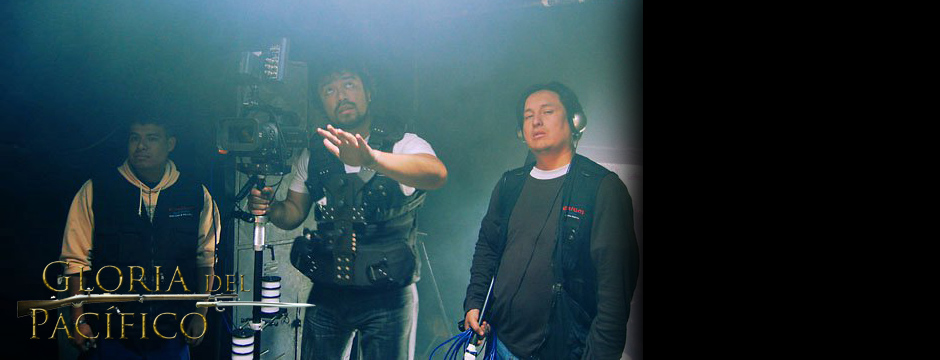
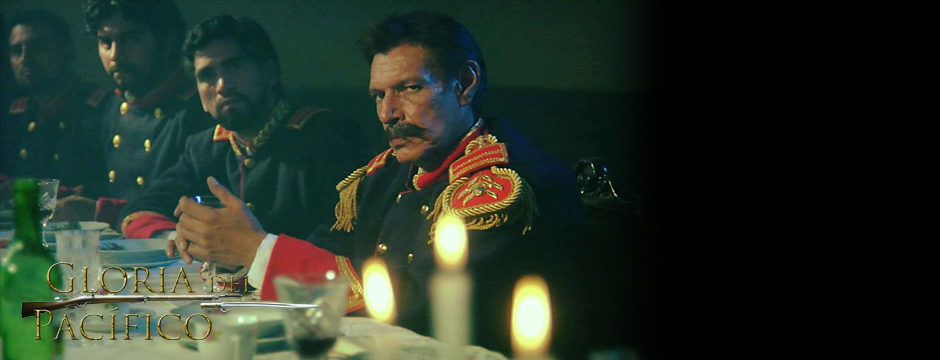
So...after posting some behind the scenes pics days ago, here I post some still frames from my camera.
This is exactly what I see in camera so you can get a good idea of how it's being done.
Filming process has a lot of stressful moments but I'm liking the results. And also the faithful team of extras from the war forum coming everyday. I thank them with my heart. :)

Thursday, September 16, 2010

Stop dreaming, it's here: Panasonic AG-AF101


Just as a side note while reading in Panasonic's website about the IBC 2010 in Europe, I stumbled again of what was mentioned earlier this year at NAB. The amazing prototype camcorder. The next generation. The Panasonic AF-101.


Introduced after the earlier model AF-100 just a while back, It delivers the shallow depth of field we filmmakers kill for and a wider field of view because of it's large 4/3 inch large imager/sensor, able to handle all standard lenses, filters, and adapters of the 35mm world. It has full native HD 1080/24p recording, variable frame rates just like my HVX200, professional audio capabilities and compatibility with SDHC and SDXC media. The interchangeable lens mount is what I also truly like (which reminds me of my good old Canon XL-1 I bought back in the late 90's because of that wonderful feature), which allows me to use all available still camera lenses as well as film-style lenses I have. It records 1080/60i, 50i, 30p, 25p and 24p (native) and 720/60p, 50p, 30p, 25p and 24p (native) in AVCHD’s highest-quality PH mode (maximum 24Mbps) and to "ad insult to injury" (lol) it is worldwide compatible as it can be switched back 'n forth between 60Hz to 50Hz.

The built-in ND filtering is a huge plus together with HD-SDI out, HDMI, time code recording, built-in stereo microphone and USB 2.0, two XLR inputs with +48V Phantom Power capability, 48-kHz/16-bit two-channel digital audio recording and supports LPCM/Dolby-AC3. Now this baby can save footage in easily available SDHC cards (goodbye to the expensive P2 cards I so hurt to buy for just merely 16 and 32GB).

SDXC is the newest SD memory card specification that can handle memory above 32GB and all the way up to 2TB.

This thing will definetly rock! I wonder how much will it cost. Scheduled to be released by the end of this year.

Here is popular Barry Green talking about this baby directly from IBC Europe.


Tuesday, November 4, 2008

New gonna-be born: the RED SCARLET

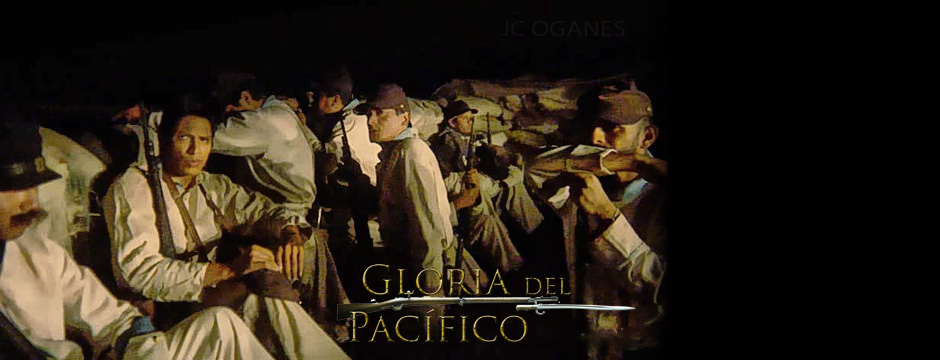
I remember when working on a film project pre-production meeting with the studio people a couple of years ago -being a digital freak with a crush on film-look- I insisted on shooting on digital but only in HD. The subject of the film was a script idea I began writing since 2005 based on the war we had with Chile back in 1879.

Being a period film, there was gonna be costly items and production stuff not only in the post-production stage but in the production itself (costumes, old era rifles and guns, canons, horses, wardrobe, locations, war scenes, explosions, etc). So, all the costs that involved shooting on 35mm film were simply out of the question as many FX work would have to be done digitally for the fight scenes where we had to do a lot of 3D duplicating for soldiers and artillery stuff. Wish we had a licence for the Massive software but with above $30,000 per machina licence.....no way!!

So digital must be....and of course in HD. Researching a year later, I came across an articel about this new little (but grandiose) HD camera capable of shooting in 4k called the RED ONE. I was astonished to read that it was gonna rival close to 35mm film and expand its latitude so much higher than HDCAM or the Varicam and other high-end cams out there....and of course, with the same variable frame rate shooting like my good HVX200.

RED ONE outputs 4,096 by 2,160 pixels is one of the most lusted after cameras of recent memory last year...and now they have announced the SCARLET, a hand-held Flash-memory based camcorder capable of a remarkable 3K resolution that can go all the way up to 120 frames per second!!!! And one thing I can't believe is that it's announced to be around $3,000. That means the relatively small Scarlet (in the pics here it's in its "naked" basic form and then with lots of accessories put on) will be capable of shooting digital video ready for display in digital cinemas, which mostly top out at around 4K these days (although typically only at 24FPS).
This RED guys also announced the EPIC, a new camera that will be capable of 5K resolution. Now that will be a cam that'll output humongous sized footage folks.....definetly, if you wann own one you'll have to take your ass to your closest serious computer store and build yourself the fastes most reliable workhorse around, otherwise your footage wont handle the amzing RAW video files it delivers. Jim Jannard definetly had a vision....the vision of putting in motion the simple question as to "if for some years now all pro still cameras manage to output RAW file picture that keep the pure signal out of its CMOS sensor (Adobe Lightroom anyone?), why not make a digital video camera that can output and handle such a chore and keep the best resolution the sensor captures intact?".....the RED Company was born....and their first baby was the RED camera.
Here is a chart I came across that explains the different resolution nowadays with different formats from pocket PC's all the way up to Ultra High-Defintion Video (passing thru HD, 3k, 4k and up).


Here's another one that should give a better idea of how different in aspect ratios and resolution each format compares with the other.


Now with the RED ONE at 4K resolution and around $17,500 just the body (accesories like lenses are like 6 to 8 grand each!! and the other peripherals arent less than $1000) this cam isnt for the normal indie filmmaker. Putting a good combo together would cost you no les than $30.000. Not cheap. I cant imagine how much then the EPIC with 5K must be. I read somewhere it was around $30.000 or so. So many will defintely run for the SCARLET at $3000. Myslef included for now.

Both EPIC and SCARLET cameras will be available in 2009, so people....start sending your downpayments to RED now! I'm sure there are lots of guys in line already.

Tuesday, September 9, 2008

Nikon zoom fixed again

I took the Nikon zoom lens for repair and the guy did well. He dismantled the whole lens in parts and found that the problem was the the Manual/Automatic switch: it wasn't clamping well enough and it became loose, leaving the focus ring to spin freely without engaging the focusing internal motors.
This was the ofending part: The switch that didn't clamp well.
I have another Canon 35mm f/2.0 Prime lens that the focus ring didn't work as well. Dismantled the whole thing also.
It seems that it has the internal spining mechanism broken. I bought it refurbished in the US and I still have the warranty but it's too much hassle having it sent there, paying shipping and waiting for weeks to have it fixed, so just went ahead and took care of business myself. The guy sure seems to know what he's doing. Gotta pick it tomorrow though.
I just hope the Nikon lens doesn't become broken again and this time its fixed for good.

UPDATE: Went to pick up my Canon 35mm Prime and it works fine at last. The Nikon zoom lens is not giving me any problems either. Hope it stays that way.

Thursday, July 10, 2008

Letus Extreme 35mm adapter

So now, this thing is quite heavy!


Weighing like a medium size rock, Hyen from Letus sure made this thing quite solid and professional: Sharp look, black matte finish, battery compartment inside with a magnet door (very clever), vibrating Ground Glass, rotating interchangeable lens mount (for Canon, Nikon, Minolta, Olympus and even Zeiss PL mounts for 35mm lens), allen screws for tightening parts and included is an achromat for your specific camera, so I ordered the HVX200 Optimization Kit.

The HVX200 is known for sometimes not having a truly dead-center CCD chip so in some units, the ground glass screen will not be totally centered when attached to the camera. Mine has that small issue as I noticed, so I called Hyen at Letus Corp. He was very helpful in telling me the options (which included sending the camera back to Panasonic for fixing that which of course I declined....to much time), so I came back with my own solution: rotating the adapter 180* so it would be on the upper side (the Letus has this L-shaped kinda form) and then....the focusing screen was sharp center and framed! But that also arouse other problems: the adapter was now a bit high for the bracket support that holds the Letus in place with the rods, so I had to make my own in a metal workshop. Aluminum of course not to put more weigh on the already heavy kit. I had it the next day and problem solved!

Now, once the adapter was attached to the camera, the next step is to achieve sharp focus on the ground glass inside the Letus. This is achieved by zooming out all the way to the "wide" position (Z00 in the HVX200). What we get to see is the focusing screen way far inside a "dark room" and to the sides we can notice the prism system mirrors. Then zoom in more until we fill up all the viewfinder screen (and a little bit more to avoid vignetting depending on the lens used). We point at something bright and we focus until we get to see the grain in the ground glass. When that is achieved it's a good idea to write down the focus number and never touch the focusing ring again. Mine is at focus 0.95 and the screen is filled up by Z22.7 but it could differ a bit on some other camera units. You can see that sharp focus is achieved when you get to see the grain in the ground glass. In the picture to the left you can see the grain in the ground glass. The overexposed white spot top right is a bright lamp that I turned down with the dimmer after the pic. The Letus needs to be off by the way. Only turn it on when fully focused to make the grain go away but leave it off for now. Now attach the lens. For this test I used a two lenses: the Canon AF 22-55 f/4.0 and the Canon EF 35mm f/2.0 Prime lens. I chose those two different lens because of the difference in speed and see how the Letus handled range of apertures. Now, the focus chart helps to detect unevenness in sharpness or any fall-off on the sides. So far, so good. I don't see any side blurriness too much and it seems fine .

Thursday, January 17, 2008

Cubano, the videoclip

Shooting the videoclip has been awesome. Great people and hilarious Cheito Quiñones. Also the Arturo and Patty Lavalle, mexican producers and professional people I loved working with.
I also met Alain Pastrana, author and mastermind of all these. Great gentle guy. He wrote that song as a tribute to his fellow cuban countrymen. His new single called "Cubano" talks about the struggle cubans go thru in search for a new and better life outside the island. The shooting was very curious as we were form many different countries all together in one single production.
We all know Miami is more latin than american (actually, we are americans too...I personally don't know who decided to call citizens of the United States americans when americans are all who live in the American continent, all inlcuding central and south america....but well, that's another topic). The different accents all around was the funny thing: light technicians and the gaffer were mexicans, the grip was from Dominican Republic, the producers were from Mexico, the drummer and guitarists were from Cuba and Cheito is from Puerto Rico.

We got to shoot three versions in the end (came out as a surprise for me actually): the salsa version, the reggaeton one making a duo with Joselito and a rap version with Knight. The official one is the salsa version to be promoted as a single.

I then took the material to Nebraska for editing and finished the post-production back in Lima applying our Proceso Cinemático Digital.

Here is the final video and below the behind-the-scenes.

Alain Band - "Cubano"


ALAIN BAND - "Cubano" from Juan Carlos Oganes on Vimeo.


Cubano - Behind the scenes


Saturday, January 12, 2008

Shooting day

Here is the behind-the-scenes of the SuperMovida Intro.
It's in two parts below.

La SuperMovida -Behind the scenes Part I


La SuperMovida -Behind the scenes Part II